
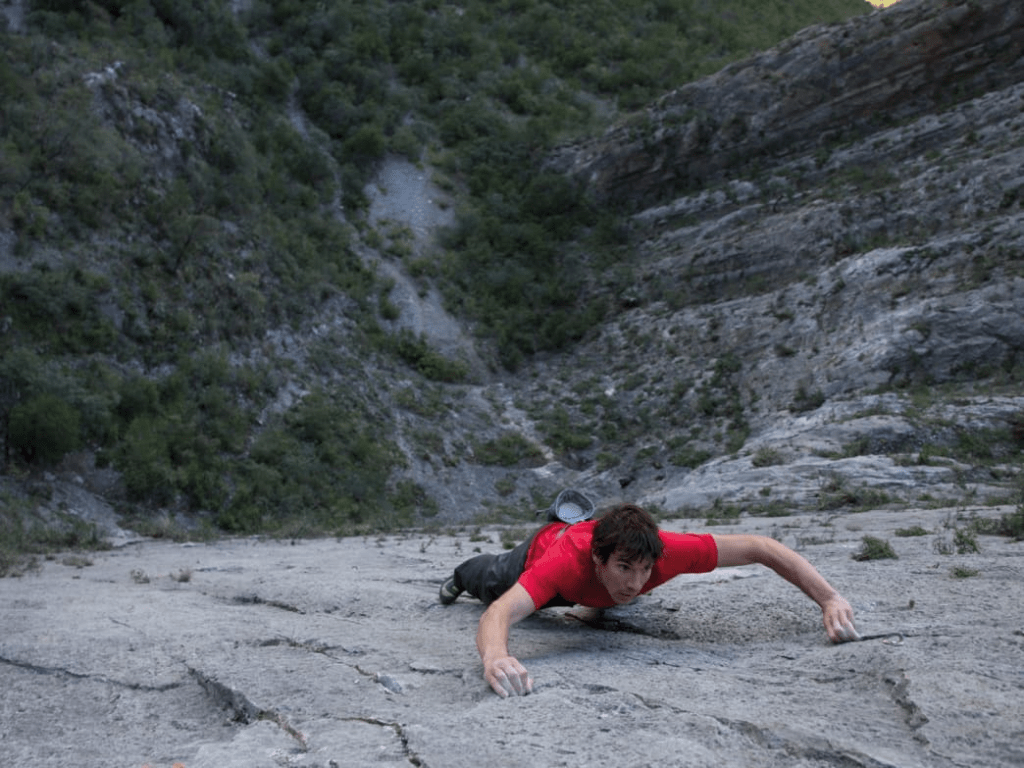
This week I learned about… (drum roll) Alex Honnold. The quintessence of risk who’s spent more time than anyone in the world on a rock, Alex has climbed mountains such as El Capitan, a 3000 ft vertical-face rock in Yosemite National Park. Oh and did I mention – he does this without ropes or safety gear.
This man virtually has no fear of living and his life hangs in the balance – quite literally – on each of his crazy expeditions. Why would anyone dedicate their entire being to mastering a craft such as climbing a rock whilst living like a nomad, living in their van, and peeing in a bottle. What makes someone sacrifice so much – their family, their safety, basic comfort, and the “fun” that most young adults like to have in their 20s – to face dizzying heights, unimaginable risks, and (let’s face it) death. And what can we learn from him?
After researching his life and listening to the podcasts and interviews he has been in, I can tell you that the answer on why he does what he does is both simple and complicated.
Alex does it because he’s passionate about climbing. He doesn’t do it for money. Or fame. Or for being known as the greatest rock climber on the face of the Earth.
Passion – weird word isn’t it? This one word is often used to chalk up people’s success without acknowledging their years and years of struggle, pain, practice, and voluntary suffering. The truth is that while people believe Alex has achieved monumental success simply because of his “passion,” his journey has been a long and arduous one. Climbing since the age of 10, Alex has practiced and mastered rock climbing for the longest time and has done so as a result of his strong interest in the sport and his belief that human potential is unlimited.
He started climbing in indoor gyms at around 10 years old and transitioned to outdoor climbing in his late teens. His love for the sport has driven him to push the boundaries of what is possible in climbing. He is also psychologically gifted as his makeup is suited perfectly to the demands of solo climbing and a study examining his brain has suggested that Honnold may experience fear differently than others because the fear circuitry of his brain (amygdala) is essentially dysfunctional.
Alex’s decision to climb El Capitan solo was the result of many years of preparation and practice, both physically and mentally. It was a personal goal that he set for himself, understanding all the risks and painstakingly preparing to mitigate them as much as possible. This process was 7 years long, and with each climbing trip and practice session, he became a little bit better and steadily collected nuggets of belief that helped his dream of climbing El Capitan become reality.
Isn’t that inspiring?
A man with a dream who works hard everyday till the vision morphs into a goal and, eventually, becomes the reality that you and I learn about and dissect.
We all can learn the importance of taking risks and facing our fears from Alex. Whether it’s changing careers, starting a new business, or any other significant life decision, deep understanding and preparation can transform our perceived risks into more predictable outcomes. Here are the 3 main lessons I’ve learned from the legendary climber:
#1 Listen to your fears
It’s important for us to listen to our fears, understand why they exist, and then make well-informed decisions about how to proceed. Understanding and confronting your fear is the first step to improving your situation and resolving your issues. To help manage your fear, think about how Alex stays calm and composed dangling atop a 3000ft rock wall.
Oftentimes when I’m personally scared of big tasks or upcoming events, I try to remind myself that fear is natural and there is learning and growth on the other side of being courageous and bold. Take consistent action in facing your fears and watch them shrink!
#2 Continuous learning and improvement
Taking big risks or making sweeping changes are often scary at first. To mitigate this overwhelming sense of fear, break down your goal into the tiniest, most manageable parts. Want to start a business? Begin with a side project. Interested in doing an internship? Start with researching your chosen field. Each small step will build your confidence and competence. Continuous learning and improvement is vital for long-term growth and success; it took Alex 7 years to prepare himself to embark on his El Cap free-solo and memorise every single foothold on his ascent.
#3 Risks should never be risky
What if I told you that Alex doesn’t view his daring climbs as “risky.”
By meticulously preparing for each climb, Alex mitigates his own “risks” to the point where he is confident in his abilities to execute the climb successfully. This is why his climbs seem extremely dangerous and nerve-wracking for the average Joe but seem totally normal to someone who has prepared for it day-in and day-out.
This level of self-awareness and honest assessment of our strengths and risks is vital for our long-term success and well-being. So, no, quitting your full-time job to become a DJ might not be the best calculated risk.
While I have no intention of ever climbing a rock (much less one without rope or safety gear), I do feel that taking risks gives our life more… well, life. I’ve found this to be true whilst surfing a big wave, joining new clubs on campus, making new friends, and cold calling/networking with senior professionals.
I’m glad I learned about Alex Hannold because he has taught me that risk-taking is an art form, blending deep preparation, fear management, incremental progress, solitude, and humility. While few of us will find ourselves on the face of a thousand-meter rock, we can all incorporate these principles to tackle the unique personal and professional cliffs we face. By approaching risks with a calculated and mindful strategy, we can push our boundaries and expand our horizons, just as Alex does.
 blog
blog 